
Paper review
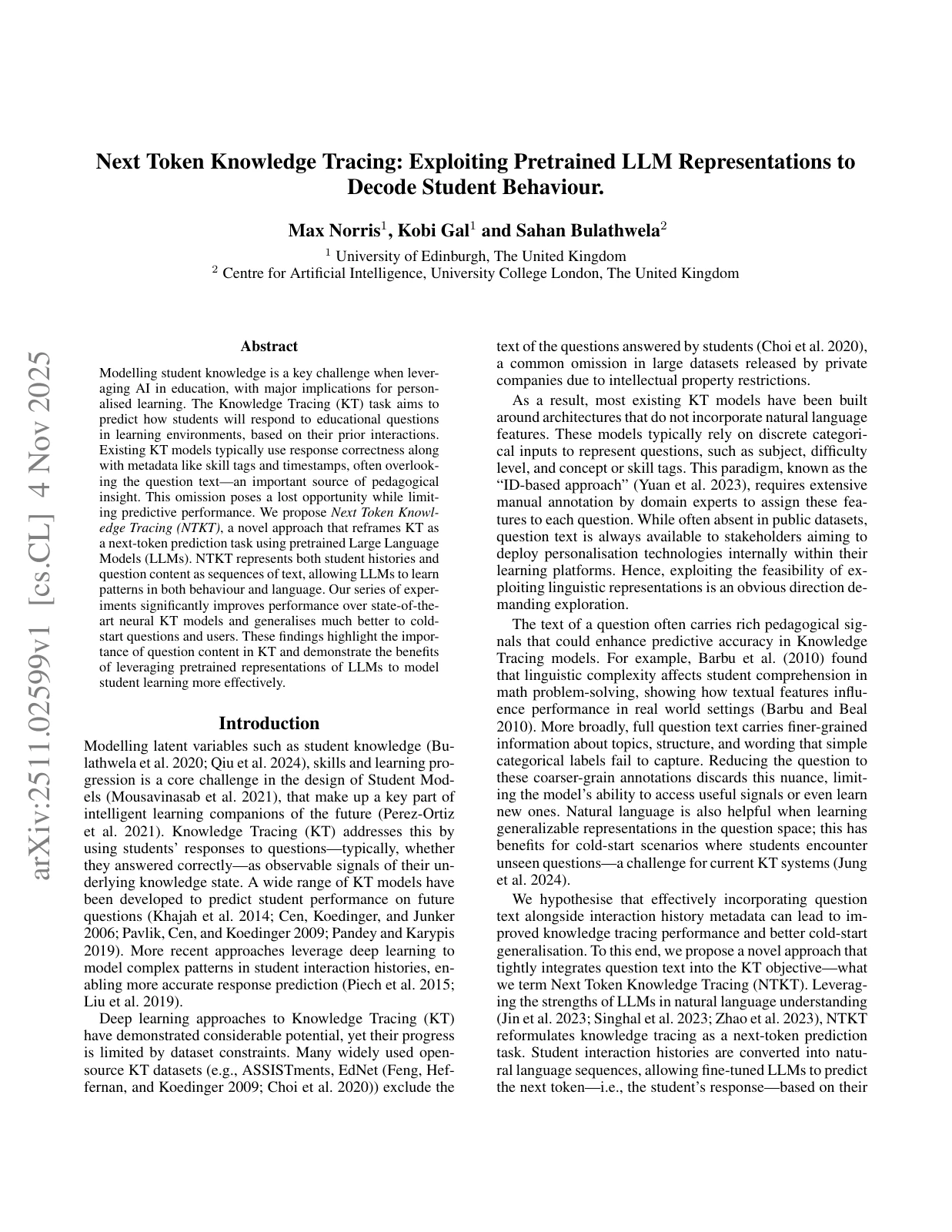
Next Token Knowledge Tracing
A pretrained language model reads the question text and student history to predict the next response, making use of information that an item identifier cannot convey.
The reported benefits concern response prediction on the evaluated data, not evidence that the model improves teaching outcomes.
SPAR-GNN: behavioural patterns and selective feedback
A graph model incorporates behavioural patterns and selectively calls an LLM for feedback. It offers a concrete way to combine student modelling with the cost of intervention.
Predictive performance and reduced model use do not, by themselves, establish that the generated feedback improves learning.
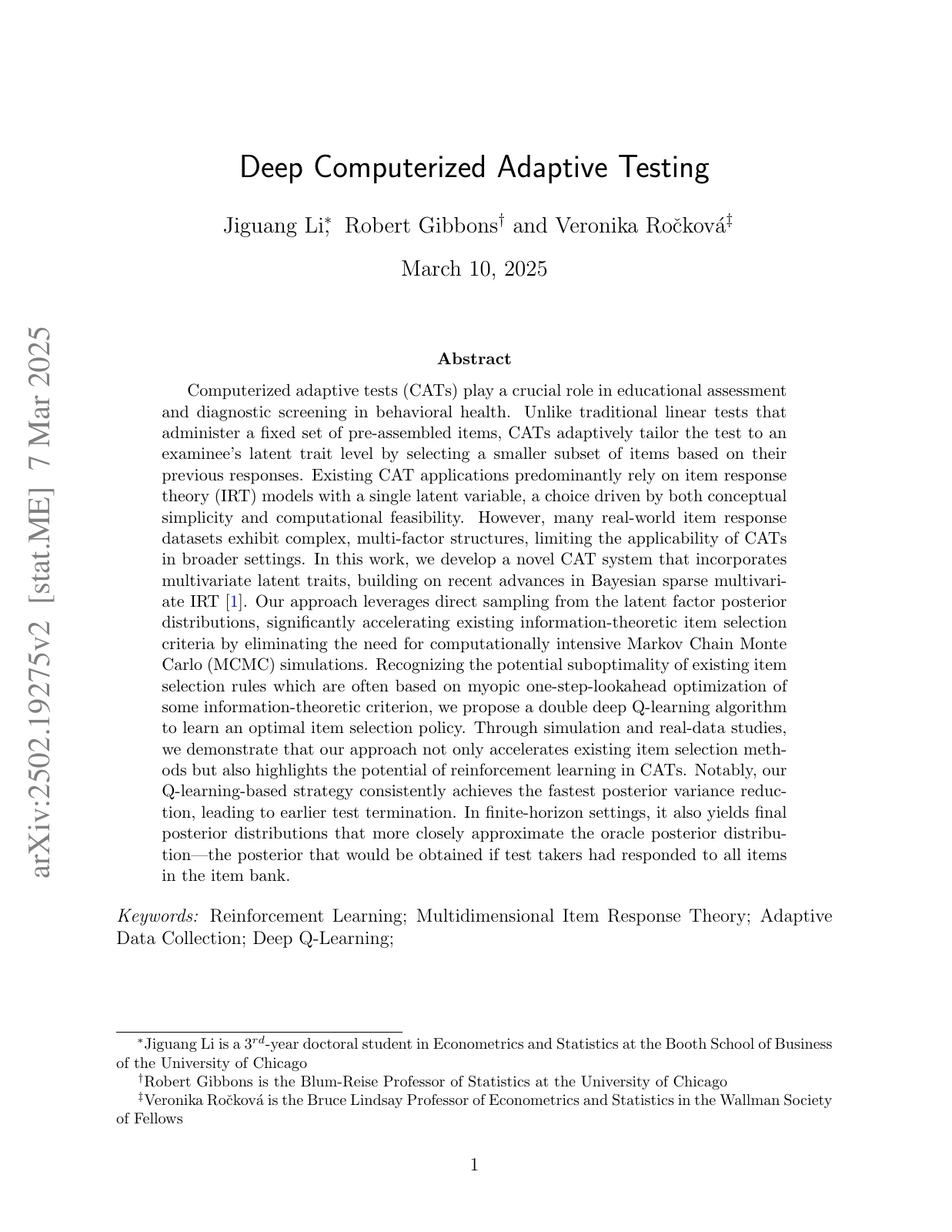
Deep Computerized Adaptive Testing
DeepCAT treats the choice of the next test item as a sequential decision, balancing information about ability against constraints such as test length.
Selecting questions to measure knowledge is a different objective from selecting activities to teach it.
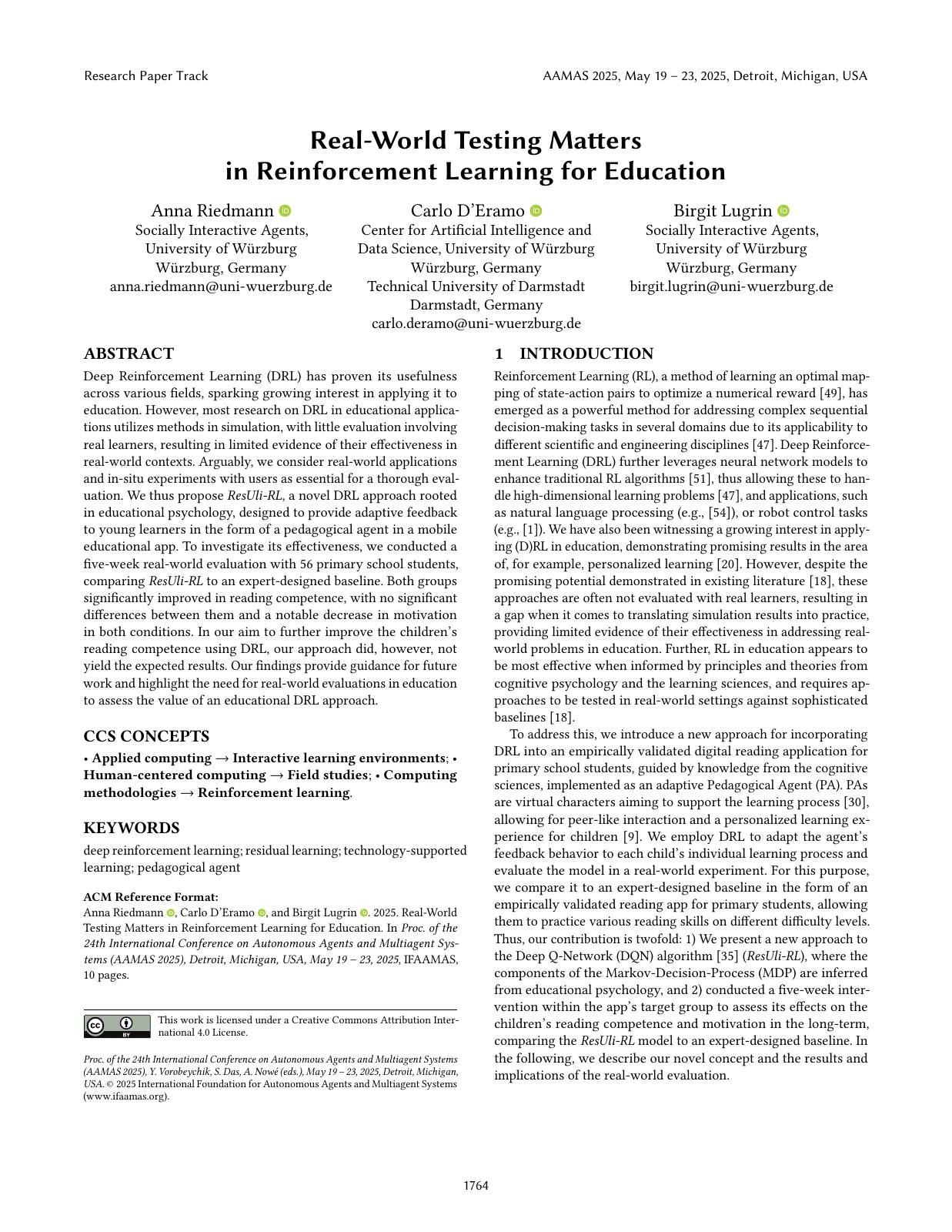
Real-World Testing Matters in Reinforcement Learning for Education
A five-week reading-app study with 56 primary-school students compared an RL-based agent with an expert-designed rule system. It found no significant difference in learning gains.
This is evidence about one deployment, not proof that either approach is generally superior or equivalent.
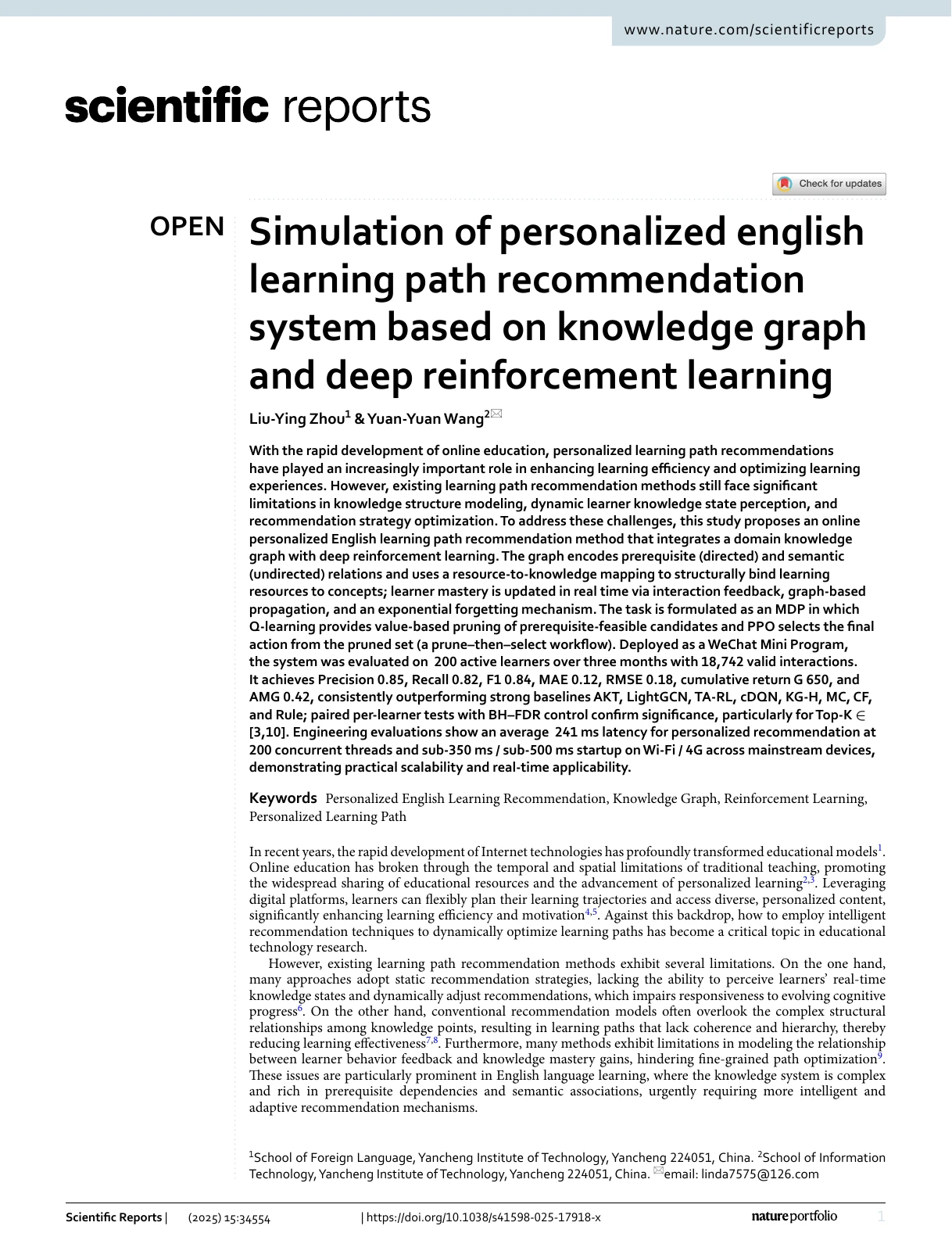
Knowledge graphs and RL for English learning paths
A personalised English-learning system combines a knowledge graph with reinforcement learning to constrain and rank possible learning paths.
Recommendation metrics and deployment results need to be read separately from evidence of lasting learning gains.
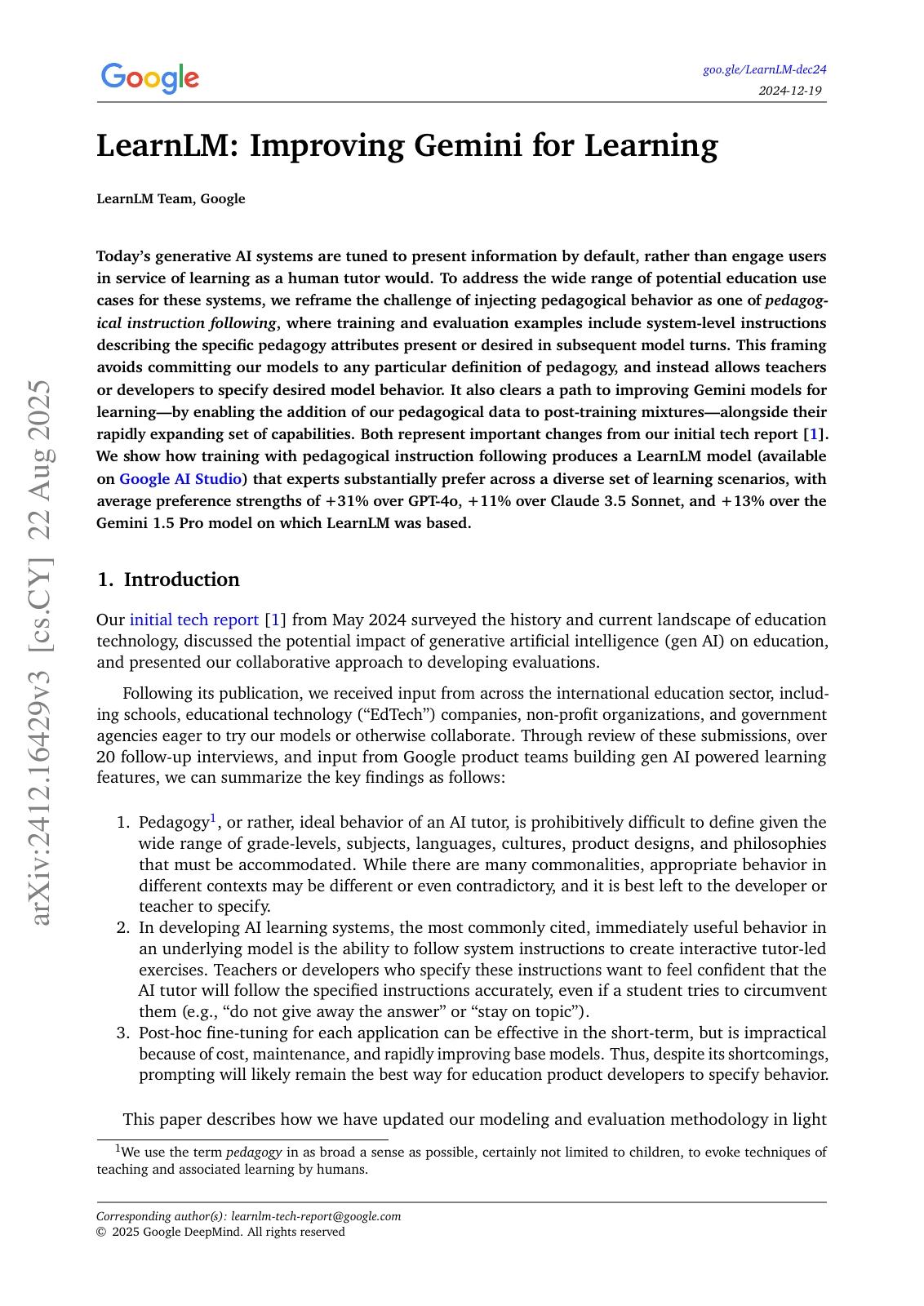
LearnLM: Improving Gemini for Learning
The technical report treats pedagogical behaviour as a capability to train and evaluate explicitly, including active learning and the management of cognitive load.
Educators’ preferences between responses are useful evidence about teaching behaviour, but are not a classroom learning trial.
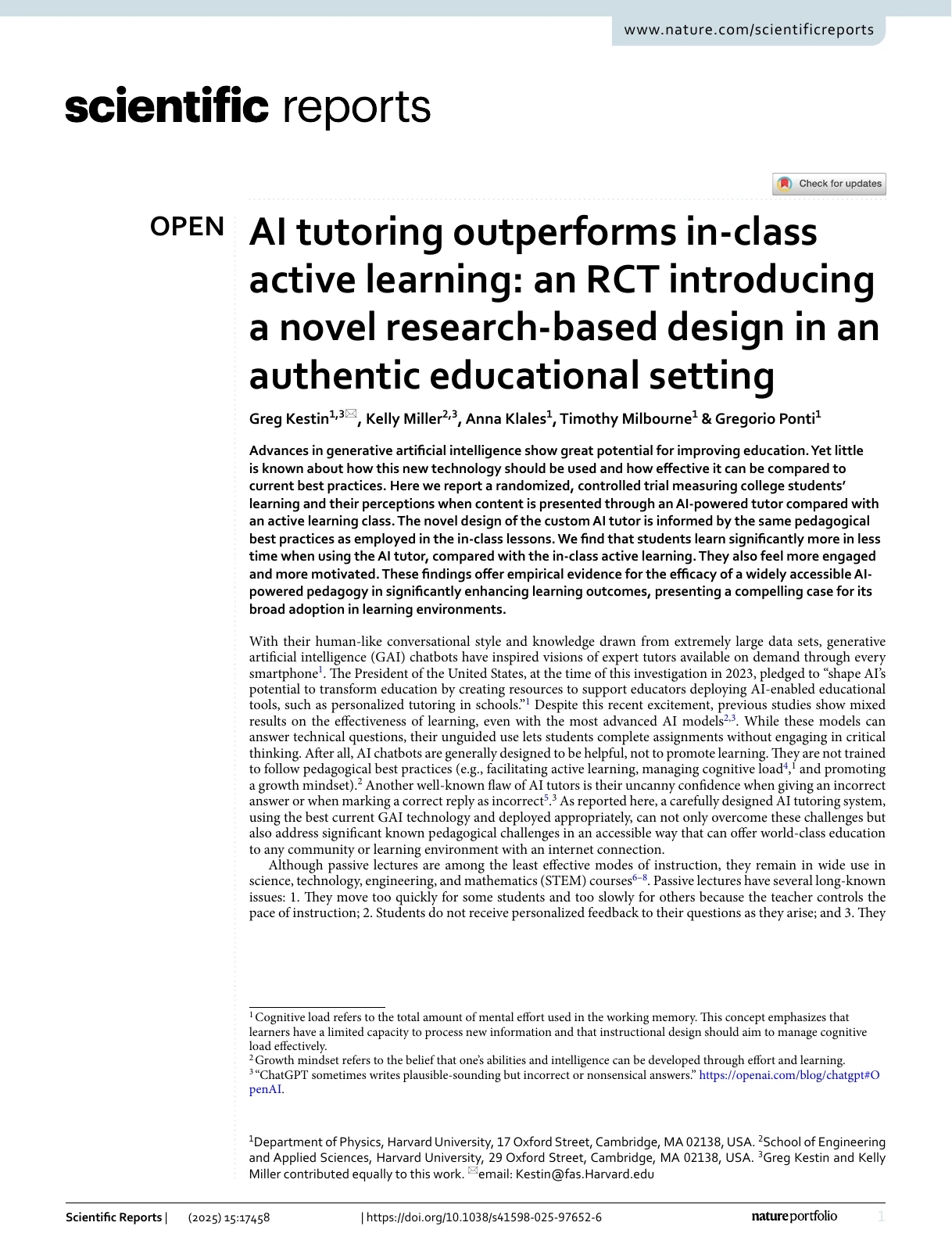
AI tutoring and in-class active learning
A randomised undergraduate-physics study compared a deliberately designed AI tutor with in-class active learning and found stronger immediate learning results in the AI condition.
The result belongs to this tutor, material and study setting; it does not establish that generic chatbots outperform teachers.
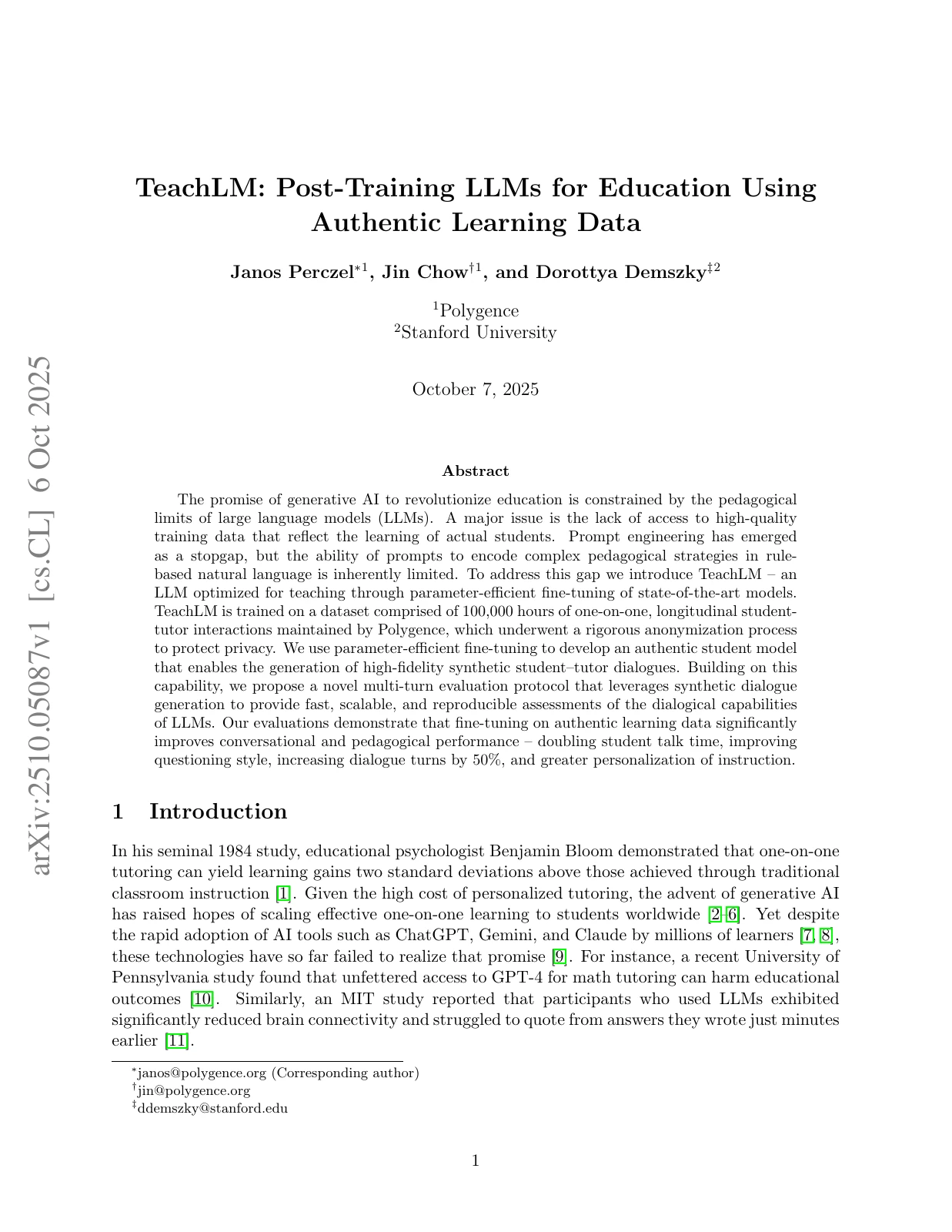
TeachLM: learning from authentic tutoring data
TeachLM uses authentic tutoring conversations to fine-tune tutor and student models, then evaluates tutoring through simulated multi-turn dialogues.
The conversational improvements come from simulation, not measured learning gains in a classroom trial.
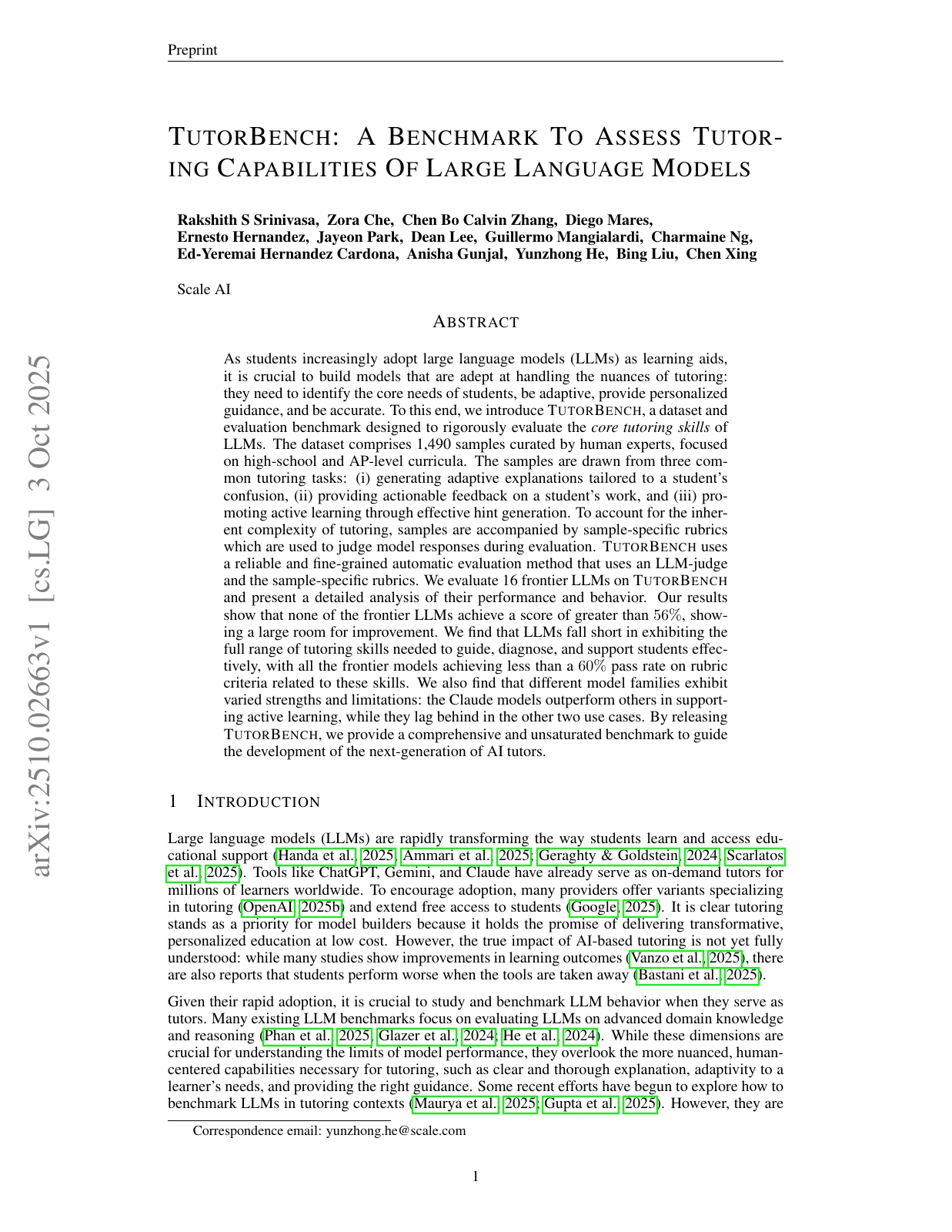
TutorBench: assessing tutoring capabilities
A collection of 1,490 human-authored scenarios assesses tutoring responses against pedagogical rubrics, including explanations, hints and feedback.
A rubric score from an automated judge is a benchmark result, not a measured learning outcome for students.